Mostrando entradas con la etiqueta 2009. Mostrar todas las entradas

jueves, 21 de enero de 2010

Programa "Conociendo nuestra cultura" - Arte Oeste Infantil

Una de las actividades que desarrolló Fundacion CICLO dentro del Programa “Conocer nuestra cultura”, que tiene como objetivo dar a conocer las diferentes expresiones artísticas del país, fue el evento Arte Oeste Infantil y Juvenil.
Con entrada libre y gratuita, se expusieron los trabajos de artistas de la zona oeste del Gran Buenos Aires, de entre 6 y 15 años de edad.
De este modo, estudiantes de diversos talleres de plástica zonales, alumnos de 3 escuelas especiales de Ramos Mejía y también chicos de 2 organizaciones barriales carenciadas del Partido de La Matanza, dieron a conocer sus obras.
Durante dos fines de semana, los días 13, 14, 20 y 21 de Septiembre en el horario de 15 a 20 hs. en la Sede de nuestra Fundación, en Alvear 155 de Ramos Mejía, el público concurrió a observar los trabajos.
Además se desarrollaron varias actividades como: dibujo, plástica grupal, una obra de títeres, show de magia, lectura de cuentos y sorteos.
El domingo 21 de septiembre, para finalizar con la explosión exitosa, celebramos el Día de la Primavera en nuestro jardín, donde se realizaron actividades al aire libre.

miércoles, 23 de diciembre de 2009

Sinterklaas, la más interesante y divertida fiesta holandesa

El cinco de diciembre tiene lugar una de las fiestas más importantes del año en Holanda (junto con ‘Koninginnedag’, ‘El Día de la Reina’ el 30 de abril). Se llama ‘Sinterklaas’ (antes ‘Sint Nicolaas’), o sea ‘San Nicolás’. Y no, no es Papa Noel, es al revés. En la vieja colonia holandesa Nueva Ámsterdam (el posterior Nueva York) se celebraba también esta fiesta. De allí brotó ‘Santa Claus’. Se festeja también en otros países de Europa Central, pero de manera diferente y no en la medida en la cual la festejamos nosotros.

En realidad, la fiesta ya empieza dos semanas antes del cinco de diciembre, cuando Sinterklaas llega a Holanda en un barco desde España. El ‘Pakjesboot’, la ‘Barca de los Regalos’ embarca cada año en otra ciudad holandesa. Probablemente llega en barco porque en España San Nicolás es patrón de los marineros. Además de muchos regalos y dulces, lleva consigo su caballo blanco que se llama ‘Amerigo’ y muchos ayudantes, que se llaman ‘Zwarte Pieten’, ‘Pedros Negros’. Siempre había tenido sólo un ayudante pero desde que las tropas canadienses quisieron participar en la fiesta de 1946 como Pieten son muchos más.

Durante las dos semanas antes del cinco de diciembre, los niños ponen sus zapatos bajo de la chimenea o sobre la alfombra unas cuantas veces por semana. Esta es una costumbre que ya existía en el siglo XIII en mi ciudad, Utrecht. Casi siempre llenan los zapatos con paja y una zanahoria para el caballo. Por la noche Sinterklaas y los Zwarte Pieten pasan por los techos y calles y dejan regalitos en los zapatos. La noche del cinco es ‘Pakjesavond’ o sea ‘Noche de regalos’ en la cual los Pieten dejan un grande saco lleno de regalos. En los zapatos y también en el saco se encuentran además de regalos muchos dulces especiales, por ejemplo tu inicial de chocolate, fruta o animales de mazapán y pequeñas galletitas con especias.

Al menos algunos regalos también tienen un poema. Este poema expresa las calidades positivas y negativas del destinatario. Si es un adulto, se ríe también un poquito de él o ella. Si son todos adultos, se suele poner sus nombres en un papelito, ponerlo en un sombrero y sacar uno. Para esta persona se compra un regalo, se hace un poema y a menudo también un ‘surprise’, que es un envoltorio muy original que representa un objeto. Hoy en día hay muchos, sobre todo estudiantes, que hacen ‘el juego con el dado’. Cada uno compra unos regalitos que se pone en la mesa y se pone un reloj de cocina en cinco minutos por ejemplo. Cada número del dado se refiere a una acción. Por ejemplo: 1 es abrir, 2 es pasar todos los regalos a la persona a tu izquierda, 3 es cambiar un regalo a elección con otro, etcétera. Esto causa mucho estrés cuando querés otros regalos o al contrario, retenerlos.

Las raíces de esta fiesta son muy antiguas. La figura de Sinterklaas está basado en San Nicolás de Bari, un obispo que vivió en el cuarto siglo en Mira (en la Turquía actual) y está sepultado en Bari (que hacía parte del Reino de España, por esto dicen que viene de España). Supuestamente era una persona muy generosa al cual se atribuye también varios milagros, como haber resucitado a tres niños. Durante mil años este santo fue reverenciado solamente en el Oriente, pero desde el siglo XIII también es celebrado el día de su muerte, o sea el seis de diciembre, por los cristianos europeos. No fue sino hasta el siglo XVI que se convirtió en una verdadera festividad familiar.

A esta base cristiana se unieron elementos paganos. Odín, un dios germánico, se trasladaba también en caballo blanco. El tenía un ayudante, que como Zwarte Piet llevaba una vara -un viejo símbolo de fertilidad-, la cual Piet usaba para pegar a los niños malos. Para los cristianos era un demonio al cual San Nicolás le obligó a realizar actos nobles. También hay quienes dicen que es un niño de Etiopia salvado por San Nicolás. Se puede verlo también como sombra de una parte fea de nuestro pasado, teniendo en cuenta que Holanda traficó muchos esclavos africanos. Por esto alcunos holandeses de color se oponen a este elemento. Los niños los ven simplemente como blancos que se ensuciaron con hollín de la chimenea. Me parece más preocupante la letra de unas de las muchas canciones que cantamos durante la fiesta: “Ook al ben ik zwart als roet, ‘k meen het wel goed”. “Aunque soy negro, tengo buenas intenciones”…

Cada año, al principio de la fiesta, mis abuelos se iban al pasillo para ponerse los trajes, mi abuelo naturalmente como Sinterklaas, mi abuela como Zwarte Piet. Nunca los vi divertirse tanto como durante esa noche del año. Qué pena que no estaba cuando mi abuelo decidió imitar a San Nicolás que imitaba a su vez a un rapper holandés-marroquí. El año siguiente mi abuela falleció justo tres días antes de la fiesta. Por supuesto no teníamos tantas ganas de festejarlo, hicimos solamente el juego de los dados. El año siguiente volvió la alegría, y mi abuelo se puso su traje de nuevo. El año pasado ya estaba en los últimos meses de su vida. Por dos infartos cerebrales incapaz de comunicarse, cenó con nosotros pero se fue antes del juego. Este año estaba en Argentina, contando a todos los que querían oír sobre este fiesta especial que para mí es sobre todo la fiesta del abuelo, mi abuelo, que no por casualidad se llamaba ‘Jan Nicolaas’, o sea Juan Nicolás.

Noortje Peverelli, practicante holandesa

viernes, 18 de diciembre de 2009

My arrival to Fundación Ciclo´s expectations

Hi, my name is Maryse and I come from France where I’m studying applied foreign languages in the University of La Rochelle. This year a three-month internship is included in the training programme. Through my searching process I found the offer of the CICLO foundation and applied. So I will come along from May to August 2010 and it will be a great opportunity for me to get to know another language, another country and culture but also to improve my pedagogic and professional skills, meet new people and expand my bearings.
My friends all think that I’m really lucky and I’m aware of it even if they are sad to see me only once in a while because I’m always moving somewhere else. My parents and family think it’s a good thing as well. It’s for me really important to interact with people and find out best ways to understand other people from all over the world without language barrier. That’s why I look forward to it but before that I’m now preparing my exams and my departure in Malaysia for the second part of the academic year. To prepare my arrival in Argentina I will start after my exams to study Spanish language alone with the Assimil method, and I plan to look for informations on Argentina. During the 5 months before May I plan to keep up doing sport and writing, which are my main activities I practice besides university, and I will enjoy the fact to be in Asia and probably travel in the nearest country there. Then at the end of the internship I will take some days to travel in Argentina, and in Venezuela where my brother is studying this year and some other places if I get enough time, for example to go visit friends in Brasil before going back in Europe and starting my last year of master degree at the beginning of september.

jueves, 17 de diciembre de 2009

Fundación Ciclo en el Anuario del Zonal del Diario Clarín

En el mes de diciembre, Fundación CICLO salió en el anuario del zonal de La Matanza del diario Clarín. Allí se destacan los hechos más relevantes del 2009.
En esta ocasión, lo que motivó la nota llamada “El arte bajo los pies”, fue la colocación, en las calles más céntricas de Ramos Mejía, de las baldosas que participaron del 1º Concurso de Arte en vereda llamado “Baldosas para Ramos”.
Invitamos a todos, especialmente a quienes aún no saben de que se trata, a leer el artículo.


Foto de Fin de curso de Coaching

Foto de los alumnos con la profesora del curso de Coaching realizado por la Fundación CICLO. Por primera vez, se ofreció este tipo de modalidad: fueron cuatro sábados, una vez por mes. Este curso se realizará nuevamente en el 2010.

sábado, 5 de diciembre de 2009

Empanadas, requiem e brasileri in Lederhösen

Nel frattempo mi trovo quasi due mesi a Buenos Aires e comincio a sentirmi abbastanza a casa, cosa che succede normalmente dopo di averti fatto alcuni amici. Gli saluti quotidiani dell’uomo della sicurità dell’angolo e della pizzeria così come trovare per strada le ragazze del “mio” bar e la nonnina napoletana della “mia” lavanderia mi danno l’idea che sono qua da anni (anche perché la gente del mio quartiere in Olanda appena conosco.)

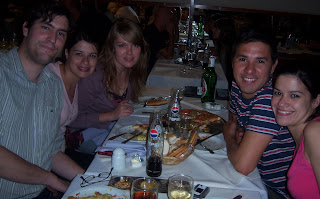
Con una tirocinante argentina della fondazione e i suoi amici sono andata a mangiare pizze ed ‘empanadas’ (un tipo di calzoni ripieni di carne maccinata, prosciutto/formaggio o verdure per esempio). Mi sembra che verso le undici abbiamo cominciato a mangiare e ha durato un tempo fino a che terminasse il mio piatto. Questo mi ocorre spesso qui, perché i miei compagni di tavolo hanno l’abitudine di parlare molto durante il mangiare e ovviamente non posso non rispondere. (Non gli diró che ci sono genitori olandesi, soprattutto prima della mia generazione, che divietano il parlare durante i pasti.) A quest’ora il ristorante era ancor pienissimo, anche con bambini piccoli che lottavano contro il sonno. Mia madre, in vacanza in Italia, si arrabiava sempre di questo fatto, ma anche qua e un costume introdurgli a una età giovane alla vita notturna.

In Olanda uscire molte volte vuol dire andare a un bar, ristorante o cinema ma qua già all’inizio sono andata al teatro e a un concerto di musica classica. La cugina di un amico argentino frequenta una “scuola superiore musicale” e attuó in una chiesa a Saavedra, un quartiere nel nord del centro. La casa santa era piena di parenti fieri che con il telefonino e la camera lottavano contro il passare del tempo. L’atmosfera serena in combinazione con i toni puri era emozionante. Nonostante peccato che gli argentini, che secondo me possono parlare dal loro nascimento, dovevano farlo anche in questo momento. Ma questo indole sociale ha anche i suoi vantaggi. Quando ho visto passare un ragazzo con ‘mate’ (una specie di te di erbe, la bevanda nazionale) ho detto al mio amico que ancora non l’ho provato, ovviamente a voce alta, cosí che il ragazzo poteva ascoltarlo e no poteva fare altro che offrirmi il suo bicchiere.

Anche dalla fondazione mi occupo molto di cultura. Venerdì il 16 di novembre ha avuto luogo ad un centro di lingue a Recoleta –un quartiere elegante nel centro- ‘Global Village’ (‘Paese mondiale’). Questo è un mercato culturale che annualmente ed in tutto il mondo viene organizzato da AIESEC, l’organizzazione di studenti più grande del mondo che aiuta studenti ad incontrare uno stage impegnativo. Lo scopo di questo mercato è semplice, mettere gli abitanti locali in contatto con altre culture. Cose simili sempre mi attragono, d’altronde voglio collaborare con AIESEC e le ambasciate per il mio proggetto di atrarre più tirocinanti stranieri a Argentina.

I paesi partecipanti (fra altri Olanda, Finlandia, La Repubblica Ceca, Brasile, Colombia, Messico, Canada, India e Cina) che erano rappresentati in primo luogo per le loro ambasciate avevano uno stand con della informazione, degli oggetti e degli snacks nazionali e facevano una presentazione con video. Ho appreso che Brasile ha la maggior communità africana e giapponese (fuori di quei paesi) e che Colombia è uno dei paesi del mondo con la maggior biodiversità. Ho assaggiato empanadas indias con verdure e anice e ho visto in un video brasileri tedeschi vestiti in ‘Lederhosen’ (‘pantaloni di cuoio’) ballando per le strade di Rio durante il suo ‘Oktoberfest’ (festa di birra festeggiato ad ottobre). In Latinoamerica, cultura non è così legata a frontiere nazionali come in Europa. Anche mi hanno dato l’indirizzo del miglior ristorante messicano a Buenos Aires. Il suono del video di Olanda, un po’ fuori d’epoca –e per questo comico- non funzionava bene, così che la ragazza (nella foto alla destra) ha dovuto comentorlo lei stessa. La ‘kruidkoek’, ‘torta di erba’ fatta dalla madre olandese di una ragazza argentina lo ha compensato. Gli argentini erano soprattutto impressionati dai campi di fiori e ‘hagelslag’ (‘spaghetti corti di cioccolato’) che mettiamo sul nostro pane burrato durante la colazione o pranzo. Anche hanno appreso che il mio paese non è un Sodoma o Gomorra ma che la nostra politica di droga e prostituzione giusto proviene cattivo comportamento.

Noortje Peverelli, pratticante olandese

Empanadas, réquiem y brasileros en Lederhösen

Estoy hace casi dos meses en Buenos Aires y empiezo a sentirme bastante en casa, cosa que normalmente ocurre después de haber hecho algunos amigos. Los saludos diarios con el hombre de la seguridad de la esquina y de la pizzería así como encontrar por la calle a las chicas de “mi” bar y la abuelita napolitana de “mi” lavandería me hacen pensar que llevo años acá (también porque a la gente de mi barrio en Holanda, apenas los conozco).


Junto a una compañera argentina y sus amigos fui recientemente a comer empanadas y pizzas. Me parece que ya eran las once cuando empezamos a comer y duró un largo rato hasta que terminara mi plato. Esto me pasa a menudo acá, porque mis compañeros de mesa suelen hablar mucho durante la comida y obviamente no puedo evitar responder. (No voy a decirles que hay padres holandeses, sobre todo antes de mi generación, que prohíben hablar durante las comidas). A esa hora el restaurante estaba todavía muy lleno, también con niños pequeños que luchaban contra el sueño. Mi madre, de vacaciones en Italia, se enfadaba siempre sobre este hecho, pero también acá es costumbre introducirlos a una edad joven a la vida nocturna.

En Holanda salir muchas veces significa ir a un bar, restaurante o cine pero acá desde que llegué fui al teatro y a un concierto de música clásica. La prima de un amigo argentino va a un “escuela secundaria musical” y actuó en una iglesia en Saavedra, un barrio en el norte del centro. La iglesia estaba llena de familiares orgullosos que, con el celular y la cámara, luchaban contra el paso del tiempo. La serena atmósfera junto con los tonos límpidos era emocionante. No obstante fue una lástima que los argentinos, que pueden hablar desde su nacimiento, tenían que hacerlo también en este momento. Pero esta índole social tiene también sus ventajas. Cuando ví pasar a un chico con mate dije a mi amigo que todavía no lo había probado, naturalmente a voz alta, así que el chico podía oírlo y no podía hacer otra cosa que ofrecerme su vaso.


En la fundación también me ocupo mucho de cultura. Viernes el 16 de noviembre tuvo lugar en un centro de idiomas en Recoleta -un barrio elegante en el centro- ‘Global Village’ (‘Pueblo mundial’). Esto es un mercado cultural que anualmente y en todo el mundo viene organizado por AIESEC, la organización de estudiantes más grande del mundo que ayuda estudiantes a encontrar una práctica desafiante. El fin de este mercado es simple, poner los habitantes locales en contacto con otras culturas. Semejantes cosas siempre me atraen, además quiero colaborar con AIESEC y embajadas en el marco de mi proyecto de atraer más practicantes extranjeros a Argentina.


Los países participantes (entre otros Holanda, Finlandia, La República Checa, Brasil, Colombia, México, Canadá, India y China), que venían representados principalmente por sus embajadas tenían un stand con información, objetos y snacks nacionales y hacían una charla informativa con video. Aprendí que Brasil tiene la mayor comunidad africana y japonés (fuera de esos países) y que Colombia es uno de los países del mundo con la mayor biodiversidad. Saboreé empanadas indias con verduras y anís y vi en un video de brasileros y alemanes vestidos en ‘Lederhosen’ (‘pantalones de cuero’) bailando por las calles de Río durante su ‘Oktoberfest’ (fiesta de cerveza festejada en octubre). En Latinoamérica, la cultura no es tan ligada a fronteras nacionales como en Europa. También me dieron la dirección del mejor restaurante mexicano de Buenos Aires. El sonido del video sobre Holanda, un poquito fuera de época –y por esto gracioso- desafortunadamente no funcionaba bien, así que la chica (en la foto a la derecha) tenía que comentarlo ella misma. El ‘kruidkoek’, ‘tarta de hierba’ hecha por la madre holandesa de una chica argentina de AIESEC, lo compensó. Los argentinos estaban impresionados sobre todo por los campos de flores y ‘hagelslag’, (“fideos cortos de chocolate”) que ponemos en nuestro pan mantequillado durante el desayuno o la comida. También aprendieron que mi país no es un Sodoma o Gomorra pero que nuestra política de droga y prostitución justo previene mala conducta.

Noortje Peverelli, practicante holandesa

jueves, 3 de diciembre de 2009

Empanadas, requiem en Brazilianen in Lederhösen


Inmiddels ben ik al bijna twee maanden in Buenos Aires en ik begin me hier al aardig thuis te voelen, wat meestal pas gebeurd als je een paar vrienden hebt gemaakt. Het dagelijks groeten van de beveiliger op de hoek en de dichtsbijzijnde pizzaman en ook het tegenkomen op straat van de meiden van “mijn” kroeg en het Napolitaanse omaatje van “mijn” wasserette geven mij het idee dat ik hier al tijden ben (vooral omdat ik met de bewoners van mijn wijk in Nederland nauwelijks contact heb).

Met een Argentijnse mede-stagiaire en haar vrienden ben ik pas ‘empanadas’ en pizza gaan eten. Empanadas zijn een soort pasteitjes/kleine calzoni, gevuld met bijvoorbeeld gehakt, ham en kaas of groenten. Tegen elven denk ik dat we pas aan de maaltijd begonnen en het duurde lang voordat ik mijn bord leeg had. Dat gebeurd me hier wel meer, en dat komt omdat mijn Argentijnse tafelgenoten meestal veel praten tijdens het eten, waar je dan natuurlijk wel op wilt reageren. (Ik zal ze maar niet vertellen dat er Nederlandse gezinnen bestaan, vooral die van voor mijn generatie, waar spreken tijdens de maaltijden verboden is.) Het restaurant zat op dat tijdstip nog tjokvol, ook met kleine kinderen die vechtten tegen de slaap. Mijn moeder sprak op de camping in Italië altijd schande van ouders die hun kinderen zo laat ophouden, maar ook hier is het gewoon je kleintjes al vroeg in te leiden in het nachtelijk leven.

In Nederland betekent uitgaan snel een bezoek aan de kroeg, restaurant of bioscoop maar hier ben ik meteen al naar het theater en een klassiek concert geweest geweest. Het nichtje van een Argentijnse vriend gaat naar een “muzikale middelbare school” en trad op in een kerk in Saavedra, een wijk in het noorden van het centrum. Het heilige huis zat vol met trotse familieleden die met behulp van mobieltje en camera vochtten tegen het voorbijgaan van de tijd. De serene sfeer in combinatie met de zuivere tonen waren ontroerend. Wel jammer dat de Argentijnen, die volgens mij vanaf hun geboorte al kunnen spreken, dit ook op dat moment niet konden laten. Dat ze zo sociaal zijn heeft echter ook veel voordelen. Toen ik iemand voorbij zag komen met ‘mate’ (een soort kruidenthee, de nationale drank) vertelde ik de vriend dat ik het nog steeds niet had geproefd, natuurlijk net zo hard zodat de jongen het kon horen en niet anders kon dan mij zijn beker aanbieden.
Ook op de stichting ben ik lekker cultureel bezig. Vrijdag 16 november vond in een talencentrum in Recoleta -een sjieke wijk in het centrum- ‘Global Village’ plaats. Dit is een culturele markt die jaarlijks en overal ter wereld wordt georganiseerd door AIESEC, de grootste studentenvereniging ter wereld die studenten helpt aan een uitdagende stage. Het doel van deze markt is simpel, de locals in contact brengen met andere culturen. Dit soort dingen vind ik altijd interessant, bovendien wil ik graag samenwerken met AIESEC en ambassades in het kader van mijn project om meer buitenlandse stagiaiars naar Argentinië te halen.

De participerende landen (onder andere Nederland, Finland, Tjechië, Brazilië, Colombia, Mexico, Canada, India en China) die vertegenwoordigd werden door voornamelijk medewerkers van de desbetreffende ambassades hadden een stand met informatie, objecten en lekkernijen uit hun land en hielden een presentatie met video. Ik leerde dat Brazilië de grootste Afrikaanse en Japanse gemeenschap heeft (buiten die landen om) en Colombia één van de landen ter wereld is met de grootste bio-diversiteit. Ik proefde een Indiaas groente-anijspasteitje en zag op een video Duitse Brazilianen gekleed in Lederhosen tijdens hun Oktoberfest de straten van Rio onveilig maken. In Latijns-Amerika is cultuur niet zo gebonden aan landsgrenzen als in Europa. Ook kreeg ik het adres van het lekkerste Mexicaanse restaurant in Buenos Aires. Het geluid van de wat oubollige –en daarom grappige- video over Nederland deed het helaas niet goed, zodat het meisje (rechts op de foto) zelf commentaar moest geven. De kruidkoek gemaakt door de Nederlandse moeder van een Argentijns meisje van AIESEC maakte het goed. De Argentijnen waren vooral onder de indruk van de bloemvelden en hagelslag, en leerden dat mijn land land geen Sodom of Gomorra is maar ons drugs- en prostitutiebeleid juist wangedrag tegengaat.

Noortje Peverelli, Nederlandse stagiaire

Empanadas, requiem and Brazilians in Lederhösen

I’ve been in Buenos Aires almost two months and I’m beginning to feel quite at home, something that mostly happens after having made some friends. The daily greetings of the security guard at the corner and pizza man and meeting the girls of “my” bar and the Napolitan granny of “my” laundry service give me the idea that I have been here for ages (especially because with the people of my neighborhood in Holland I barely have any contact).

With an Argentine co-worker and her friends I went out to eat ‘empanadas’ and pizza. Empanadas are a kind of pasties/little calzoni, filled with for example minced meat, ham and cheese or vegetables. I think we started our dinner round eleven and it took a little while before I finished my plate. That happens to me often here, and that is because my Argentine table mates often talk a lot during dinner, and I naturally don’t want to stay quiet then myself. (I won’t tell them that there are Dutch families, especially those before my generation, where speaking during meals is forbidden.) The restaurant was still crowded at that hour, also with little children fighting against their sleep. My mother always got angry when she witnessed this at the camp site in Italy, but also here it’s normal to introduce your little ones to the nightlife at an early age.

In The Netherlands going out often means visiting a bar, restaurant or cinema but here I immediately went to the theatre and a concert of classical music. The cousin of an Argentine friend goes to a “musical high school” and performed in a church in Saveedra, a neighborhood in the north of the centre. The church was full of proud family members who with the help of their mobile phones and cameras fought against the passing of time. The serene atmosphere in combination with the clear tones was touching. It was a pity though that the Argentines, who I think are capable of speaking from the moment they are born, also had to do it at this moment. Their social character also has it advantages. When I saw someone passing by with ‘mate’ (a kind of herbal tea, the national beverage) I told my friend I still hadn’t tried it yet, of course so loud that the boy could hear it and had to offer me his cup.
At the foundation I’m also very culturally involved. Friday the 16th of November, in a language institute in Recoleta -a chic neighborhood in the centre- took place ‘Global Village’. This is a cultural market that is organized annually and all over the world by AIESEC, the largest student organization in the world that helps students find a challenging internship. The goal of this market is simple, bringing the locals in contact with others cultures. These kinds of things always attracted me, besides I would like to collaborate with AIESEC and embassies in the framework of my project to attract more foreign interns to Argentina.

The participating countries (among others Holland, Finland, Czech Republic, Brazil, Colombia, Mexico, Canada, India and China) that were represented by mostly associates of the concerned embassies had a booth with information, objects and delicacies from their country and held a presentation with a video. I learned that Brazil had the biggest African and Japanese community (besides those countries) and that Colombia is one of the countries in the world with the biggest biodiversity. I tasted Indian vegetable-anise pastries and saw in a video how German Brazilians dressed in ‘Lederhosen’ (‘leather pants’) partied in the streets of Rio during their ‘Oktoberfest’ (beer feast celebrated in October). In Latin America culture is not so tied to national boundaries as in Europe. I also got the address of the best Mexican restaurant in Buenos Aires. The sound of the old-fashioned –and because of that funny- video about The Netherlands didn’t work well, so the girl (in the picture on the right) had to comment it herself. The ‘kruidkoek’ (‘herb cake’) made by the Dutch mother of an Argentine girl of AIESEC made it up. The Argentines were mostly impressed by the flower fields and ‘hagelslag’ (‘little chocolate spaghetti’), and learned that my country is not some kind of Sodom or Gomorrah but that our drugs and prostitution policy in fact prevents bad conduct.

Noortje Peverelli, Dutch intern

Empanadas, requiem and Brazilians in Lederhösen

I’ve been in Buenos Aires almost two months and I’m beginning to feel quite at home, something that mostly happens after having made some friends. The daily greetings of the security guard at the corner and pizza man and meeting the girls of “my” bar and the Napolitan granny of “my” laundry service give me the idea that I have been here for ages (especially because with the people of my neighborhood in Holland I barely have any contact).


With an Argentine co-worker and her friends I went out to eat ‘empanadas’ and pizza. Empanadas are a kind of pasties/little calzoni, filled with for example minced meat, ham and cheese or vegetables. I think we started our dinner round eleven and it took a little while before I finished my plate. That happens to me often here, and that is because my Argentine table mates often talk a lot during dinner, and I naturally don’t want to stay quiet then myself. (I won’t tell them that there are Dutch families, especially those before my generation, where speaking during meals is forbidden.) The restaurant was still crowded at that hour, also with little children fighting against their sleep. My mother always got angry when she witnessed this at the camp site in Italy, but also here it’s normal to introduce your little ones to the nightlife at an early age.

In The Netherlands going out often means visiting a bar, restaurant or cinema but here I immediately went to the theatre and a concert of classical music. The cousin of an Argentine friend goes to a “musical high school” and performed in a church in Saveedra, a neighborhood in the north of the centre. The church was full of proud family members who with the help of their mobile phones and cameras fought against the passing of time. The serene atmosphere in combination with the clear tones was touching. It was a pity though that the Argentines, who I think are capable of speaking from the moment they are born, also had to do it at this moment. Their social character also has it advantages. When I saw someone passing by with ‘mate’ (a kind of herbal tea, the national beverage) I told my friend I still hadn’t tried it yet, of course so loud that the boy could hear it and had to offer me his cup.
At the foundation I’m also very culturally involved. Friday the 16th of November, in a language institute in Recoleta -a chic neighborhood in the centre- took place ‘Global Village’. This is a cultural market that is organized annually and all over the world by AIESEC, the largest student organization in the world that helps students find a challenging internship. The goal of this market is simple, bringing the locals in contact with others cultures. These kinds of things always attracted me, besides I would like to collaborate with AIESEC and embassies in the framework of my project to attract more foreign interns to Argentina.

The participating countries (among others Holland, Finland, Czech Republic, Brazil, Colombia, Mexico, Canada, India and China) that were represented by mostly associates of the concerned embassies had a booth with information, objects and delicacies from their country and held a presentation with a video. I learned that Brazil had the biggest African and Japanese community (besides those countries) and that Colombia is one of the countries in the world with the biggest biodiversity. I tasted Indian vegetable-anise pastries and saw in a video how German Brazilians dressed in ‘Lederhosen’ (‘leather pants’) partied in the streets of Rio during their ‘Oktoberfest’ (beer feast celebrated in October). In Latin America culture is not so tied to national boundaries as in Europe. I also got the address of the best Mexican restaurant in Buenos Aires. The sound of the old-fashioned –and because of that funny- video about The Netherlands didn’t work well, so the girl (in the picture on the right) had to comment it herself. The ‘kruidkoek’ (‘herb cake’) made by the Dutch mother of an Argentine girl of AIESEC made it up. The Argentines were mostly impressed by the flower fields and ‘hagelslag’ (‘little chocolate spaghetti’), and learned that my country is not some kind of Sodom or Gomorrah but that our drugs and prostitution policy in fact prevents bad conduct.

Noortje Peverelli, Dutch intern

jueves, 26 de noviembre de 2009

Baldosas para Ramos

Este sábado 28 de noviembre a las 12 horas en la Librería Tince, ubicada en Av. de Mayo 233, se podrán ver las 3 baldosas ganadoras del 1º Concurso de Arte en vereda, “Baldosas para Ramos”.
Allí se entregará al público presente un mapa para que puedan recorrer las calles de Ramos Mejía e ir descubriendo estas obras de arte que estarán decorando las veredas más céntricas, como las de: Bar Jaleo; peluquería Moon; disquería la Fusa; Librería Artística Aguilar, Juguetería Liz II, Librería Las Vegas, MANO Servicio médico, entre otras.

IMPORTANTE: En caso de lluvia, el evento pasara a realizarse al siguiente sábado, 5 de diciembre, misma hora y lugar.


viernes, 20 de noviembre de 2009

Coro Alberto Ginastera del Conservatorio de Música de Morón

El domingo próximo, 22 de noviembre, a las 20 horas se presentará en la Catedral de Morón (Belgrano 351) el Coro Alberto Ginastera del Conservatorio de Música de Morón.
La obra que van a interpretar es Gloria, de Francis Poulenc (1899-1963). Compuesta en 1959, fue estrenada en Boston en 1961.

La obra está organizada en seis movimientos que se detallan a continuación (con sus tonalidades):
1. Gloria in Excelsis (Sol mayor).
2. Laudamus Te (Do mayor).
3. Domine Deus (Si menor).
4. Domine Fili Unigenite (Sol mayor).
5. Domine Deus, Agnus Dei (si bemol menor).
6. Qui Sedes anuncio Dexteram Patris (Sol mayor) .

Si bien fue pensada para ser interpretada por una soporano solista, coro y orquesta, en esta oportunidad el Coro Alberto Ginastera del Conservatorio de Música de Morón la presentará con acompañamiento de piano.
El coro, cuyo director desde su creación (hace más de 20 años) es el Ministro Roberto Saccedente, estará acompañado en esta oportunidad por la Solista Andra Oviedo Leguizamón y la pianista Teresa Marques da Silva.

"Baldosas para Ramos"

El sábado 28 de noviembre a las 12 horas en la puerta de la Librería Tince, ubicada en Av. de Mayo 233, se verán las 3 baldosas ganadoras del 1º Concurso de Arte en vereda, “Baldosas para Ramos”, y se entregará al público presente un mapa para recorrer las calles de Ramos Mejía y descubrir Las baldosas que estarán decorando las veredas más céntricas, como las de: Bar Jaleo; peluquería Moon; disquería la Fusa; Librería Artística Aguilar, Juguetería Liz II, Librería Las Vegas, MANO Servicio médico, entre otras.

Acá les presentamos estas obras de arte que embellecerán nuestras veredas de Ramos Mejía.

Artista: Luis Visconti.

Artista: Liliana Dowbley


Artista: Jessica García.

Artista: Silvia Torres .

Artista: Susana Piasco.


Artista: Claudia Sánchez.


Artista: Stella Maris Gugliotta.

Artista: Gustavo Eduardo Codina.


Artista: Adriana Malagueño.

Artista: Celia Marta Casabone


Artistas: Silvia De Bernardis, Cristina García, Silvana Maríncolo, Adriana Remesar, María Gabriela Morales.

Artistas: Stella Maris Berenger, Mónica Esjaita, Silvia Fabricotti, Liliana Otranto

miércoles, 18 de noviembre de 2009

Mural donado por la Escuela Especial del Colegio Ward

Hoy los alumnos de la Escuela Especial del Colegio Ward nos entregaron un hermoso mural realizado por ellos para decorar la Fundación CICLO.
En diciembre, los chicos vendrán a visitarnos para ver la obra colocada en la pared de la Fundación.